
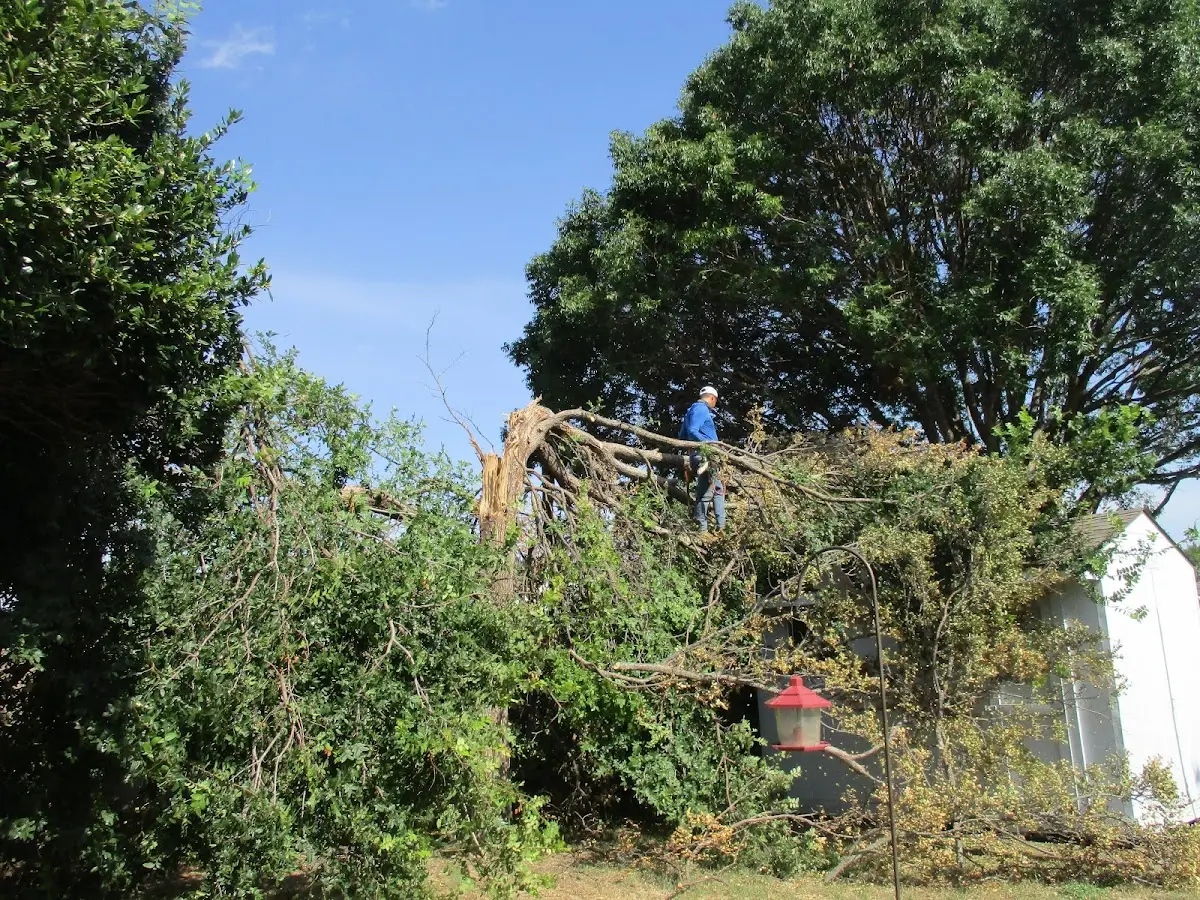
Professional dead tree removal for homes and businesses in Wheat Ridge and surrounding Colorado communities.
B. Haney and Sons Arborists provides expert dead tree takedowns throughout Wheat Ridge, CO. Dead trees often look like ordinary tree work to non-arborists, but they require very different handling — wood integrity testing, careful rigging, and frequent crane usage. Our arborists know the difference and execute accordingly.
Wheat Ridge homeowners and businesses count on careful, professional dead tree removal to protect their properties and their tree investments. Serving a city of 31,807 across Colorado, B. Haney and Sons Arborists brings the experience, equipment, and crew capacity to handle dead tree removal projects of any scale. We begin every job with an honest evaluation, walk the property with you, and provide a clear written estimate before any cuts are made.
Our dead tree removal crews in Wheat Ridge, CO are ISA-trained, fully insured, and equipped with bucket trucks, climbing gear, chippers, and stump grinders sized for the job. From the initial assessment through final cleanup, we maintain open communication and hold ourselves to ANSI A300 and Z133 industry standards. That is how B. Haney and Sons Arborists has earned the trust of property owners across Colorado.

Our proven dead tree removal process delivers reliable results for Wheat Ridge property owners every time.
Call any time and our arborist comes out to walk your property. We assess the trees, discuss your goals, and explain the work in plain language.
B. Haney and Sons Arborists provides transparent written pricing for every dead tree removal job in Wheat Ridge. The quote includes all the work, all the cleanup, all the equipment — no surprises on the final invoice.
Our Wheat Ridge crew shows up when promised, sets up the site safely, and works with the equipment and rigging your specific job requires. ISA-trained arborists make every cut intentionally.
We haul all branches and brush, chip the small wood, grind stumps if requested, rake the work area, and leave your property cleaner than we found it.
Have questions about dead tree removal in Wheat Ridge, CO? Start here.
The cost of dead tree removal in Wheat Ridge depends on tree size, species, access, equipment required, and whether stump removal is included. B. Haney and Sons Arborists provides free written estimates with transparent pricing so you know exactly what to expect before any work begins. We work in a wide range of budgets and never quote blind.
B. Haney and Sons Arborists crews working dead tree removal jobs in Colorado are led by ISA-trained arborists who follow ANSI A300 pruning standards and ANSI Z133 safety standards. Individual ISA certifications vary by team member, but every crew leader has the training to plan and execute the work properly.
Yes. B. Haney and Sons Arborists carries full general liability and workers compensation insurance for all dead tree removal work in Wheat Ridge. Tree work is high-risk and uninsured contractors expose property owners to serious financial liability. We provide certificates of insurance on request before any job starts.
Yes. Standard B. Haney and Sons Arborists dead tree removal service in Wheat Ridge includes hauling all branches and brush, chipping small wood, raking the work area, and leaving the site cleaner than we found it. No surprise debris-removal fees on the final invoice.
Our reputation is built on results. Here is what our customers have to say.
"Tree fertilization and deep-root feeding program for our older trees. The arborist tested the soil first, prescribed a custom blend, and applied it properly into the root zone. Trees are noticeably more vigorous this growing season. Worth it."
"I have been using B. Haney for our property for years. They prune our maples every other winter and the trees have never looked healthier. There is something to be said for hiring an arborist company that has been doing this since 1940 — the experience shows in every cut."
"Tree planting service was excellent. The arborist helped us pick species that would thrive in our soil and climate, and the planting itself was done with proper depth, root ball preparation, and staking. All five trees are doing great two seasons later."